Third Party Testing
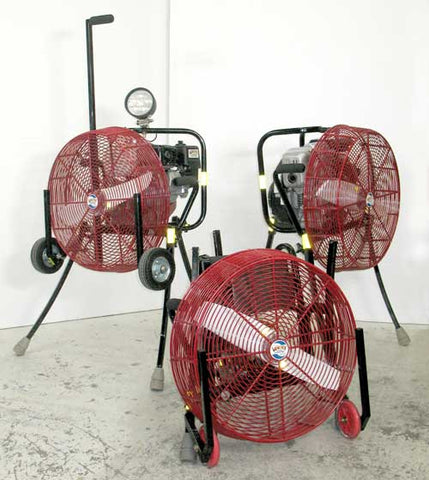
Two VENTRY® fans and two fans from our leading competitor (based on CFM ratings) were recently used in PPV tests by the Austin Fire Department, University of Texas at Austin and The Swedish Rescue Services Agency.
In the “Travis House Study” the researchers measured the flow rates of the four fans at different distances from the door, knowing that “more flow rate is always better than less” for effective PPV (p. 5). While the goal of the study was to investigate PPV in large structures---not to compare fans---the results are very favorable to the VENTRY brand. |
|
| |
|
| Here are two points from the research that we'd like to highlight. In an apples-to-apples comparison---the two fans both with 6.5 hp Honda® engines and 24-inch propellers---the VENTRY fan pushed greater airflows at all distances tested, up to 4 times that of the competitor. Even more compelling is how well our small fan also out-performed the competition. At six feet from the door, our 4 horse 20-inch VENTRY Fan pushed essentially the same air flow as the 6.5 hp 24-inch competitor. At 12 feet, the small VENTRY pushed 2.8 times the air flow of the larger competitor. |
|

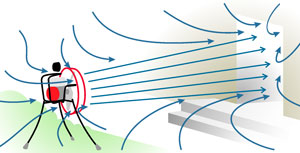
Simplified section of Figure 3 from the paper “Investigating Positive Pressure Ventilation.” |
Given the better performance despite smaller size and horsepower, the researchers suggest that “factors other than the motor rating of the fans should be considered as being important when a fire department selects fans for use in PPV” (page 5). Progressive departments that recognize and use PPV as a life-saving tactic should also choose the best fan for the job.
Since the tests, Austin Fire Department has purchased several VENTRY Fans.
Please see the complete paper online for all the details and data:
Source: “Investigating Positive Pressure Ventilation.” Authors: Ofodike Ezekoye of the University of Texas, Austin; Stefan Svensson of the Swedish Rescue Services Agency; and Robert Nicks of the Austin Fire Department. Retrieved March 3, 2008 from http://www.me.utexas.edu/~ezekoye/rsch.dir/documents/
TravisHouseStudy.pdf
|
|
POSITIVE PRESSURE VENTILATION
A COMPARISON OF FANS
- Gasoline-powered with Honda engines
- 4hp engines and higher
- Prop Sizes 20 to 24 inches
- Six Major Brands included
Introduction
NEW DATA TO BE POSTED MID-APRIL 2008!
This analysis compares the manufacturers’ published specifications and list prices of 19 different PPV fans offered by six major Fan manufacturers as of October 20, 2005. Five of the 19 fans are VENTRY® Fans by J. Neils Enterprises, Inc. Prices have shifted since the original data was gathered, but the gist of the comparison remains valid.
In choosing the sample, blowers with gas-powered Honda engines and propeller sizes and engine HPs equal to or greater than the five VENTRY® Fan models were included. With the exception of one model that was a near-duplicate of E-20-9, all fans found that fit this criteria and had complete specs available online were included.
Every effort has been made to be fair and accurate. For the complete analysis, including brand names, actual fan model numbers and sources, please email us. All data used in this comparison was provided by the manufacturer of each fan, either on their website or via email.
|
|
Interpretation
“Why choose VENTRY” you ask? For the analytical types out there (like us), we offer this data to back up what we’ve been hearing from customers since 1989. This analysis has helped to confirm that we are achieving our goal of building the best equipment possible and that we are providing the best value to end users, based on information publicly available to shoppers via the Web. Now it is up to you to find it!
Despite the saying that “there are three kinds of lies: lies, damned lies, and statistics” [Disraeli], we are confident that the information here has been gathered, analyzed and presented fairly and accurately. VENTRY Fans have been highlighted in red so that their rankings are easy to see. This analysis considers only basic sorts and calculations of the available data. You will see that VENTRY Fans are not the best in every category, but the consistency with which they rank well in all areas is telling.
We welcome any questions, comments or concerns you have about this analysis; just give us a call or send an email.
Top of page
Summary
Here are the results of comparing Air Volumes, Horsepower, Prices and Weights of 19 different PPV Fans/Blowers from 6 major manufacturers:
- VENTRY fans rank 1st, 2nd and 3rd in air volume, ranking higher than larger fans. Our smallest 4 hp fan is at the bottom of the pack, but not by much! Notice how it is pushing similar air volumes as much bigger, heavier fans! Chart
- The five VENTRY Fans produce the most air volume for the engine power, producing over 4,000 CFM for each “horse” of engine power. The others are all below 3,555 per HP, with the highest HP fans ranking last! Chart
- The five Honda-powered VENTRY fans are less expensive than all but one of the other 14 Honda-powered blowers. All the Honda-powered VENTRY Fans are under $2,000 (base models before options). Chart
- The five VENTRY Fans have the lowest price for the air volume, all falling under $85 per 1000 CFM of air output. The others cost more than $109 per 1000 CFM. Chart
- VENTRY Fans range from $234 to $367 per “horse” of engine power, and you only have to buy 4 of those to get a great fan! Chart
- The five VENTRY Fans all fall within the lightest 9 out of 19. Chart
Thank you for considering this information. Please call or email us to get a copy of the complete analysis, including brand names. |
|

Click here for a PDF file of the Summary, taken from the complete version. It is 38K and opens in a new window. The complete version of this analysis is available upon request as a PDF file. |
|
MODEL Names
The Model names used in this analysis are “coded” to show the size and HP of each fan but hide the brands (we are happy to tell you which stands for which, just ask). The first letter stands for the brand (A, B, C, D, E or V, where V equals VENTRY), followed by the prop size in inches (20, 21 or 24), then the engine HP (from 4 to 13 HP).
For example, V-24-4 is the VENTRY 24-inch 4 hp Fan.
The Data/Sample
The chart below shows all the fan models compared sorted by prop size and engine power, with the biggest on top and the smallest on the bottom. Note that the smallest Fans in the group are VENTRY models. The five VENTRY Fans included range from 4 to 6.5 HP; the other 14 range from 5.5 to 13 HP!
Data and Sources
In descending order by Prop Size and then Power (HP)
|
|
Prop
Size (Inches) |
Power
(HP) |
Air Volume (CFM) |
Weight
(LBS)
|
Price
(US $)
|
Date of Access |
E-24-13 |
24 |
13 |
17,500 |
91 |
$2,588 |
10/17/05 |
B-24-9 |
24 |
9 |
20,230 |
125 |
$2,650 |
10/18/05 |
C-24-6.5 |
24 |
6.5 |
20,478 |
98 |
$2,530 |
10/17/05 |
D-24-6.5 |
24 |
6.5 |
19,606 |
82 |
$2,542 |
10/20/05 |
V-24-6.5 |
24 |
6.5 |
27,800 |
85 |
$1,914 |
10/17/05 |
A-24-5.5 |
24 |
5.5 |
17,268 |
110 |
$2,615 |
10/18/05 |
C-24-5.5 |
24 |
5.5 |
19,555 |
95 |
$2,195 |
10/17/05 |
V-24-5.5 |
24 |
5.5 |
23,600 |
77 |
$1,535 |
10/17/05 |
V-24-5 |
24 |
5 |
23,600 |
70 |
$1,169 |
V-24-4 |
24 |
4 |
19,600 |
78 |
$1,469 |
D-21-6.5 |
21 |
6.5 |
20,152 |
79 |
$2,364 |
10/20/05 |
A-21-5.5 |
21 |
5.5 |
17,670 |
84 |
$2,292 |
10/18/05 |
C-21-5.5 |
21 |
5.5 |
17,321 |
88 |
$2,160 |
10/17/05 |
E-20-13 |
20 |
13 |
22,000 |
129 |
$2,415 |
10/17/05 |
E-20-9 |
20 |
9 |
17,500 |
91 |
$2,407 |
10/17/05 |
B-20-6.5 |
20 |
6.5 |
18,580 |
87 |
$2,250 |
10/18/05 |
E-20-6.5 |
20 |
6.5 |
17,000 |
91 |
$1,995 |
10/17/05 |
E-20-5.5 |
20 |
5.5 |
8,539 |
66 |
$1,638 |
10/17/05 |
V-20-4 |
20 |
4 |
16,100 |
64 |
$1,359 |
10/17/05 |
* Brand names and manufacturer part numbers along with the sources of all this information are available via fax or email upon request, just email or call. For current info on VENTRY, see our Specs and Prices pages.
Top of page
THE RESULTS
Air Volume (CFM)
Method: Sorted all 19 fan models solely by Air Volume (CFM), regardless of prop size or engine power.

Conclusion: More powerful engines do not seem to produce greater air volumes (more HP does not mean higher CFM). Despite two VENTRY models having only 4 HP motors, the lowest of the sample, they boast air volumes close to bigger fans. (Our little 20-inch 4 HP VENTRY Fan produces the same CFM as 6.5 HP, 9, and even 13 HP models!)
Where does all that extra energy go? If the prop is not utilizing the engine power to push air, it may be creating CO and noise.
Notes about CFM:
**CFM - Retracted vs. Extended
With the legs fully extended, the air volumes (CFM) of VENTRY Fans are even higher than those graphed above (see raw data to the right). However, to avoid the appearance of comparing apples to oranges, we used only the retracted CFM values of VENTRY Fans in this analysis. We encourage our customers to always elevate their VENTRY Fans (extend the legs) when in operation, even if only 6 inches.
Thrust
Although air volume (CFM) is the most common measure of ventilation fan output, we prefer thrust. Unfortunately, thrust values of other brands were not to be found. Thanks to the fact that every action causes an equal and opposite reaction, thrust can be measured fairly consistently by most anyone, using only a mechanics creeper and a fish scale. For VENTRY Fan thrust values, see the Output chart on our Specs page.
Top of page |
|
Data:
MODEL |
CFM
(retracted)
|
|
| V-24-6.5 |
27,800 |
29,500 |
| V-24-5.5 |
23,600 |
24,000 |
| V-24-5 |
23,600 |
23,800 |
| E-20-13 |
22,000 |
n/a |
| C-24-6.5 |
20,478 |
n/a |
| B-24-9 |
20,230 |
n/a |
| D-21-6.5 |
20,152 |
n/a |
| D-24-6.5 |
19,606 |
n/a
|
| V-24-4 |
19,600 |
20,000 |
| C-24-5.5 |
19,555 |
n/a |
| B-20-6.5 |
18,580 |
n/a |
| A-21-5.5 |
17,670 |
n/a |
| E-24-13 |
17,500 |
n/a |
| E-20-9 |
17,500 |
n/a |
| C-21-5.5 |
17,321 |
n/a |
| A-24-5.5 |
17,268 |
n/a |
| E-20-6.5 |
17,000 |
n/a |
| V-20-4 |
16,100 |
16,500 |
| E-20-5.5 |
8,539 |
n/a |
|
Air Volume vs. Engine Power (CFM and HP)
Method: Divided Air Volume by Engine Power (CFM / HP) and sorted highest to lowest.

Conclusion: The more air a fan pushes with a given amount of engine power, the more efficient the system and the lower the CO. Generally, less efficiency also equates to more noise.
VENTRY Fans have the most air volumes for the engine power (CFM per HP) and the lowest Price per 1000 CFM of air. That’s great value!
Seems to us that air volume, price, and weight should be more significant factors in choosing a PPV Fan than HP!
Top of page
|
|
Raw Data:
MODEL |
CFM / HP |
|
MODEL |
CFM / HP |
| V-24-4 |
4,900 |
D-21-6.5 |
3,100 |
| V-24-5 |
4,720 |
D-24-6.5 |
3,016 |
| V-24-5.5 |
4,291 |
B-20-6.5 |
2,858 |
| V-24-6.5 |
4,277 |
E-20-6.5 |
2,615 |
| V-20-4 |
4,025 |
B-24-9 |
2,248 |
| C-24-5.5 |
3,555 |
E-20-9 |
1,944 |
| A-21-5.5 |
3,213 |
E-20-13 |
1,692 |
| C-24-6.5 |
3,150 |
E-20-5.5 |
1,553 |
| C-21-5.5 |
3,149 |
E-24-13 |
1,346 |
| A-24-5.5 |
3,140 |
|
|
Price
Method: Sorted all 19 fan models solely by Price (list price or MSRP).

Conclusion: VENTRY Fans are underpriced! All of our Honda-powered VENTRY Fans are priced below $2,000 (base models before options).
Top of page |
|
Data:
MODEL |
Price |
|
MODEL |
Price |
|
MODEL |
Price |
| V-24-5 |
$1,169 |
C-21-5.5 |
$2,160 |
E-20-13 |
$2,415 |
| V-20-4 |
$1,359 |
C-24-5.5 |
$2,195 |
C-24-6.5 |
$2,530 |
| V-24-4 |
$1,469 |
B-20-6.5 |
$2,250 |
D-24-6.5 |
$2,542 |
| V-24-5.5 |
$1,535 |
A-21-5.5 |
$2,292 |
E-24-13 |
$2,588 |
| E-20-5.5 |
$1,638 |
D-21-6.5 |
$2,364 |
A-24-5.5 |
$2,615 |
| V-24-6.5 |
$1,914 |
E-20-9 |
$2,407 |
B-24-9 |
$2,650 |
| E-20-6.5 |
$1,995 |
|
|
|
Price vs. Air Volume
Method: Divided Price by Air Volume (CFM) to see how much each thousand CFM of air costs, then sorted lowest to highest.
![Price vs. Air Volume [$ / (CFM x 1000)] - How much will you pay for every 1000 CFM of Air Volume? Price vs. Air Volume [$ / (CFM x 1000)] - How much will you pay for every 1000 CFM of Air Volume?](../../links/fan/charts/4-PRICE-CFM.jpg)
Conclusion: VENTRY Fans have the lowest price per 1000 CFM and the most CFM (air) per HP. Make sure you get the most for your money!
Data:
MODEL |
Price per
1000 CFM |
|
MODEL |
Price per
1000 CFM |
|
MODEL |
Price per
1000 CFM |
| V-24-5 |
$49.53 |
D-21-6.5 |
$117.31 |
A-21-5.5 |
$129.71 |
| V-24-5.5 |
$65.04 |
E-20-6.5 |
$117.35 |
B-24-9 |
$130.99 |
| V-24-6.5 |
$68.85 |
B-20-6.5 |
$121.10 |
E-20-9 |
$137.52 |
| V-24-4 |
$74.95 |
C-24-6.5 |
$123.55 |
E-24-13 |
$147.90 |
| V-20-4 |
$84.41 |
C-21-5.5 |
$124.70 |
A-24-5.5 |
$151.44 |
| E-20-13 |
$109.77 |
D-24-6.5 |
$129.65 |
E-20-5.5 |
$191.83 |
| C-24-5.5 |
$112.25 |
|
|
Top of page
Price vs. Engine Power (HP)
Method: Divided Price (list or MSRP) by Engine Power (HP), then sorted lowest to highest.

Conclusion: Here is where the higher HP fans look good, until you consider how many of those “horses” you have to buy. If you love HP, consider the air volume, weight, and size. Higher HP is not necessarily a bargain!
We could pair larger engines with smaller propellers, as others have done, but what would result does not qualify as good engineering. You’d end up with a larger fan, more noise, and a sore back!
Data:
MODEL |
Price/HP |
|
MODEL |
Price/HP
|
|
MODEL |
Price/HP |
|
MODEL |
Price/HP |
| E-20-13 |
$186 |
B-24-9 |
$294 |
B-20-6.5 |
$364 |
C-21-5.5 |
$393 |
| E-24-13 |
$199 |
V-24-6.5 |
$294 |
D-21-6.5 |
$364 |
C-24-5.5 |
$399 |
| V-24-5 |
$234 |
E-20-5.5 |
$298 |
V-24-4 |
$367 |
A-21-5.5 |
$417 |
| E-20-9 |
$267 |
E-20-6.5 |
$307 |
C-24-6.5 |
$389 |
A-24-5.5 |
$475 |
| V-24-5.5 |
$279 |
V-20-4 |
$340 |
D-24-6.5 |
$391 |
|
Top of page
Weight
Method: Sorted all fans by Weight, lightest to heaviest.

Conclusion: Bigger and bigger means heavier and heavier, without the output (air volume) to justify it! In our experience, the weight of a fan can determine whether it will make it off the truck or not.
Notes: VENTRY Fan weights shown are WITH fuel and oil. It is unknown whether other brands include fuel and oil in their weights.
Top of page |
|
Data:
MODEL |
Weight |
|
MODEL |
Weight |
V-20-4 |
64 |
C-21-5.5 |
88 |
E-20-5.5 |
66 |
E-24-13 |
|
V-24-5 |
70 |
E-20-9 |
|
V-24-5.5 |
77 |
E-20-6.5 |
|
V-24-4 |
78 |
C-24-5.5 |
95 |
D-21-6.5 |
79 |
C-24-6.5 |
98 |
D-24-6.5 |
82 |
A-24-5.5 |
110 |
A-21-5.5 |
84 |
B-24-9 |
125 |
V-24-6.5 |
85 |
E-20-13 |
129 |
B-20-6.5 |
87 |
|
|
* Suspect weights. It is unlikely that these three “E” brand fans all weigh 91 pounds. This is probably a mistake on the manufacturer’s webpage. |